GERD-Tastic
Notes from the So-Called Golden Years

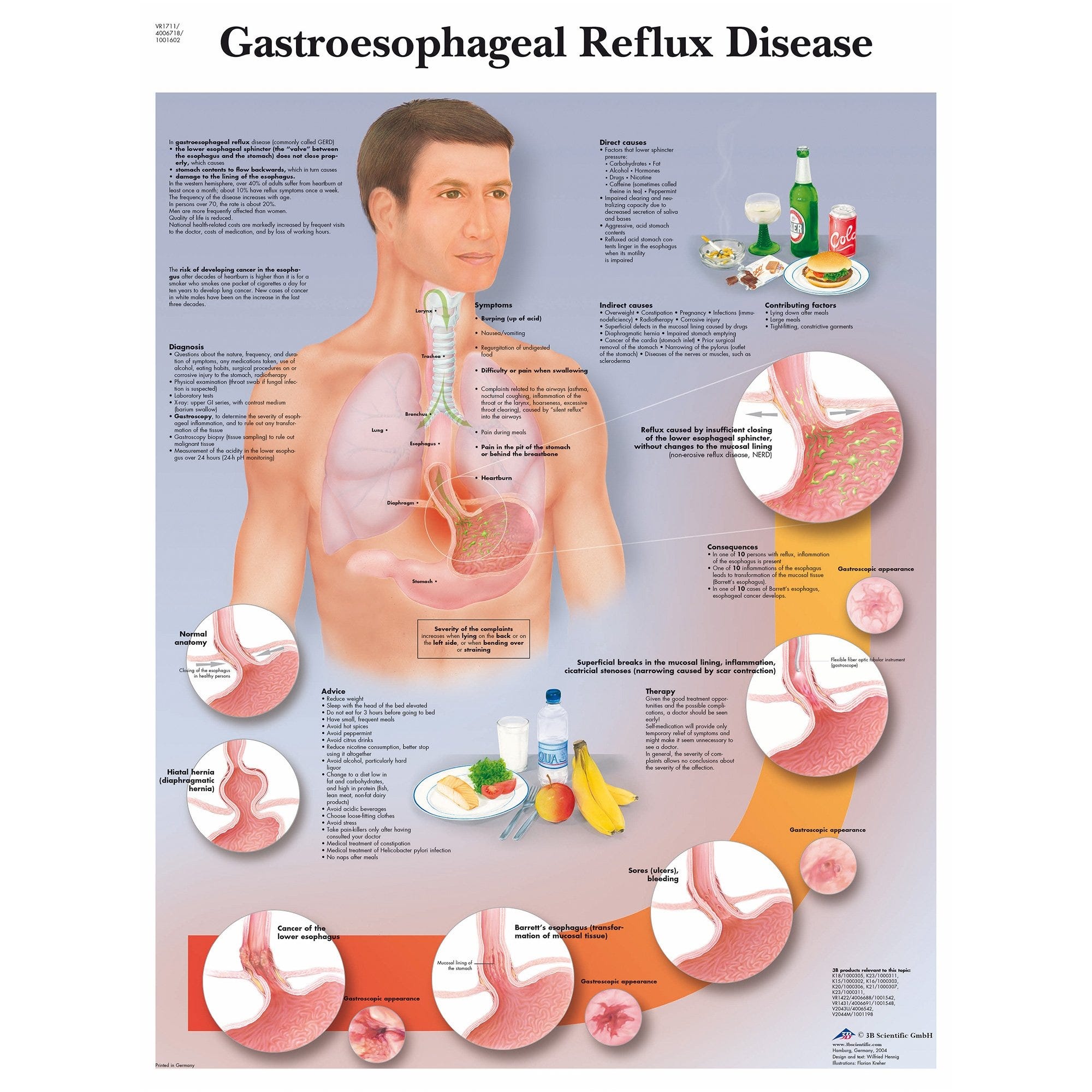
About a month and a half ago, I found myself burping up parts of a lunch I had just eaten. That’s embarrassing, but bearable—there’s no pain involved, just the discomfort of having something in your mouth at the wrong place and time. I then noticed that I’d been coughing a lot, almost like a smoker’s cough, except I don’t smoke. I’ve always felt I had a respiratory issue because if I get a cold or the flu, my voice is the first thing that goes.
I suspected I had acid reflux because the symptoms were similar, except I rarely taste acid in my throat or mouth. Mostly, I just feel food and cough. I went to the doctor’s office, where they noted my symptoms and ordered an X-ray. The results showed I have GERD (Gastroesophageal Reflux Disease, sometimes called heartburn). I also have a hernia in the stomach area, which is causing severe coughing. So far, I’ve strained two chest muscles from coughing. It seems this is a common condition that comes with aging, and although I don’t think I will die from it, it is very uncomfortable.
I need to change my diet drastically, with all foods in tiny portions. Certain foods and ingredients are off-limits: ginger, citrus fruits, and almost anything that contains fat. I can mainly drink water and some caffeine-free teas. The doctor recommends eating six small meals a day instead of two or three. So far, I’ve had oatmeal with unsalted nuts and blueberries for breakfast. Yesterday, I added a whole banana to my oatmeal, which caused me to cough repeatedly. I felt like my entire body was protesting the food I had just eaten. I had to support my lower back because I could feel the vibrations of the cough spreading there.
There are moments in one’s life when you realize you have to make changes. Having GERD is one of them. It’s a chronic condition that can be managed through diet and lifestyle adjustments. But it’s going to hamper my social activities—going to restaurants with friends, especially those who are into the food aesthetic. Even going to a bar would be a headache. Not just because of avoiding alcohol, but also because mocktails often contain citrus or spice. I can’t even really drink bubbly water; it has to be still. And there are physical rules I now have to live by: no lying down for at least three hours after eating, early dinners, and so on.
While doing some research, I found that there appears to be no fiction or essays about GERD. You can look it up online or on YouTube, but there’s no creative literature on the disease. One might wonder: Is it a boring disease? Or a taboo topic? GERD is often linked with heartburn, and nobody seems interested in heartburn except in the novel Heartburn by Nora Ephron. For me, the word “heartburn” doesn’t quite capture my experience. If I eat the wrong food, I enter a violent coughing fit that ripples through my body. I can feel the cough building like a small volcano inside me, but I try to hold it in because of the pain in my ribs.
The other bad thing about GERD is that it leaves me physically exhausted. Coughing takes up a lot of energy, and afterward, I feel completely drained. I’m also concerned that no one has creatively written about GERD. To me, this disease is a big deal because it radically changes one’s lifestyle. I suspect many people avoid the subject because there’s no cure—and because facing it can feel hopeless. But for me, it’s also an adventure, and part of being a senior citizen.
The experiences I had with my late mom and uncle taught me that the Golden Years, as they were advertised, are a myth. That phrase has been lingering in my head a lot lately.

In 1959, Del Webb, a developer and builder, created a planned community in Arizona for older adults aged 55 and up. He used the term “Golden Years” to describe the prime of life—the reward after decades of work. The ads promised a retirement of golf, dancing, gardening, and endless social fun. The message was clear: when one reaches their golden years, life isn’t over; it’s finally enjoyable.
But the one thing they didn’t talk about was illness. Eighty percent of senior citizens (65+) will develop at least one chronic health condition, and many will have multiple. When I talk to people younger than me who are caring for aging parents, they tell me how hard it is. I will eventually have some control of my GERD symptoms, but at this moment, I’ve come to understand something simple: the Golden Years may be for someone else.
Dude my boyfriend is a nurse with GERD and he just takes Prilosec. I just take Rolaids.
As a 72 year old with a 69 year old wife, I appreciate the loss of vigor and confidence in old age. But there are many things that us old people can still do.The Del Webb fantasy was always simply a marketing technique, as are so many senior corporate enterprises. I recommend just aging in place-don't move away from the place you built your life.